
Almost a year after winning the International Green Gown Awards for our indigenous language preservation project, Wikimedia Community User Group Malaysia was invited to present on indigenous lifeways and biodiversity at Expo 2025 in Osaka, Japan on 30th August 2025.
0 Comments
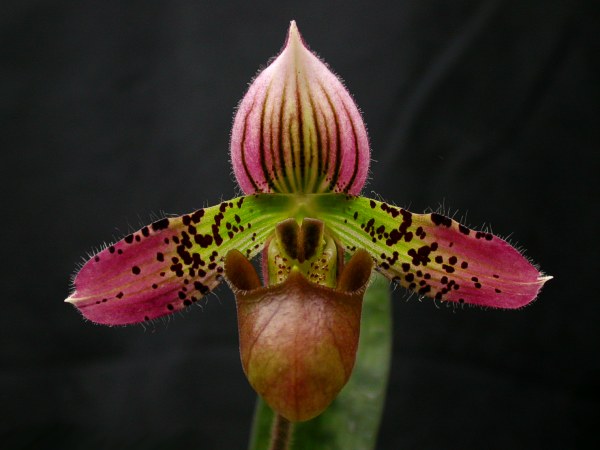 Flower of Paphiopedilum acmodontum, which its English Wikipedia article was expanded. Malay Wikipedia administrator PeaceSeekers recently participated in "The World Destubathon," a global Wikipedia editing competition held from June 16 to July 13. Despite time constraints from a concurrent internship, PeaceSeekers successfully expanded 26 STEMM-related stub articles on the English Wikipedia, focusing primarily on obscure, endangered, and medically significant botanical species such as the Bornean Melicope sororia. By leveraging a formal background in biochemistry to navigate rigorous English scientific writing and translate foreign-language references, PeaceSeekers was officially recognized by the event organizer as the leading STEMM writer for the final two weeks of the contest. Supported by Wikimedia UK and the Open Knowledge Association (OKA), the experience successfully bridged the editor's academic expertise with digital knowledge sharing and has inspired their ongoing commitment to the broader 50,000 Destubbing Challenge.
Writer: PeaceSeekers  Pada 4 Jun 2025, Kumpulan Komuniti Pengguna Wikimedia Malaysia (Wikimedia Malaysia) telah menganjurkan WikiKata Bahasa Tamil buat julung kalinya, bertempat di Fakulti Bahasa dan Linguistik, Universiti Malaya.
Program ini merupakan hasil usahasama antara Wikimedia Malaysia dengan Dr Elanttamil Maruthai, pensyarah Bahasa Tamil di fakulti universiti tersebut. Seramai 25 orang pelajar fakulti telah menyertai program ini, termasuk tujuh orang sukarelawan Wikimedia Malaysia. Penulis turut berkesempatan mengambil peluang menjadi sukarelawan Wikimedia yang telah membimbing pelajar-pelajar universiti. Baca lanjut ... 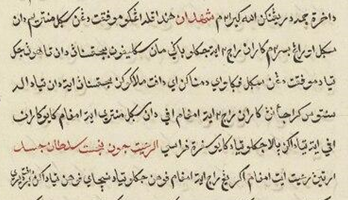 An excerpt of Sulalatus Salatin containing what is claimed as a Persian quote (bottom red phrase), meaning “the people is the root whilst the king is the tree”. Following a recent Wikisource Conference in Denpasar, Bali, Wikimedia contributor PeaceSeekers highlighted the growing technical synergy between Wikisource and Wikidata as a transformative step for digital archiving. The integration offers multiple advanced capabilities, including text annotation via the Annotate QID template for contextual reading, and structural linking using the Wikidata Book Model to dynamically organize complex metadata. Furthermore, this bilateral linkage enables precise lexical referencing for historical dictionaries and the cross-referencing of intertextual quotes—such as tracing Persian excerpts or Islamic hadiths found in classical Malay manuscripts like the Sulalatus Salatin back to their primary origins. Highlighting a beta reading application developed by the Indian Wikisource community that operates entirely on queried Wikidata metadata via API, the report underscores how integrating these platforms can significantly enhance the accessibility, contextual depth, and functional potential of open-source historical texts.
Writer: PeaceSeekers  Dalam usaha memberikan inspirasi untuk memelihara bahasa orang asal di Malaysia, Komuniti Kumpulan Pengguna Wikimedia Malaysia telah bekerjasama dengan UNESCO Jakarta untuk menganjurkan “Pertandingan WikiKata 2024.”
Inisiatif ini ialah sebahagian daripada matlamat yang lebih luas yang digariskan Dekad Bahasa Orang Asal Antarabangsa 2022–2032 UNESCO, yang mana memberi tumpuan memastikan kewujudan dan kebolehcapaian jangka panjang bahasa-bahasa orang asal, terutamanya dalam ruang digital. Baca lanjut ... 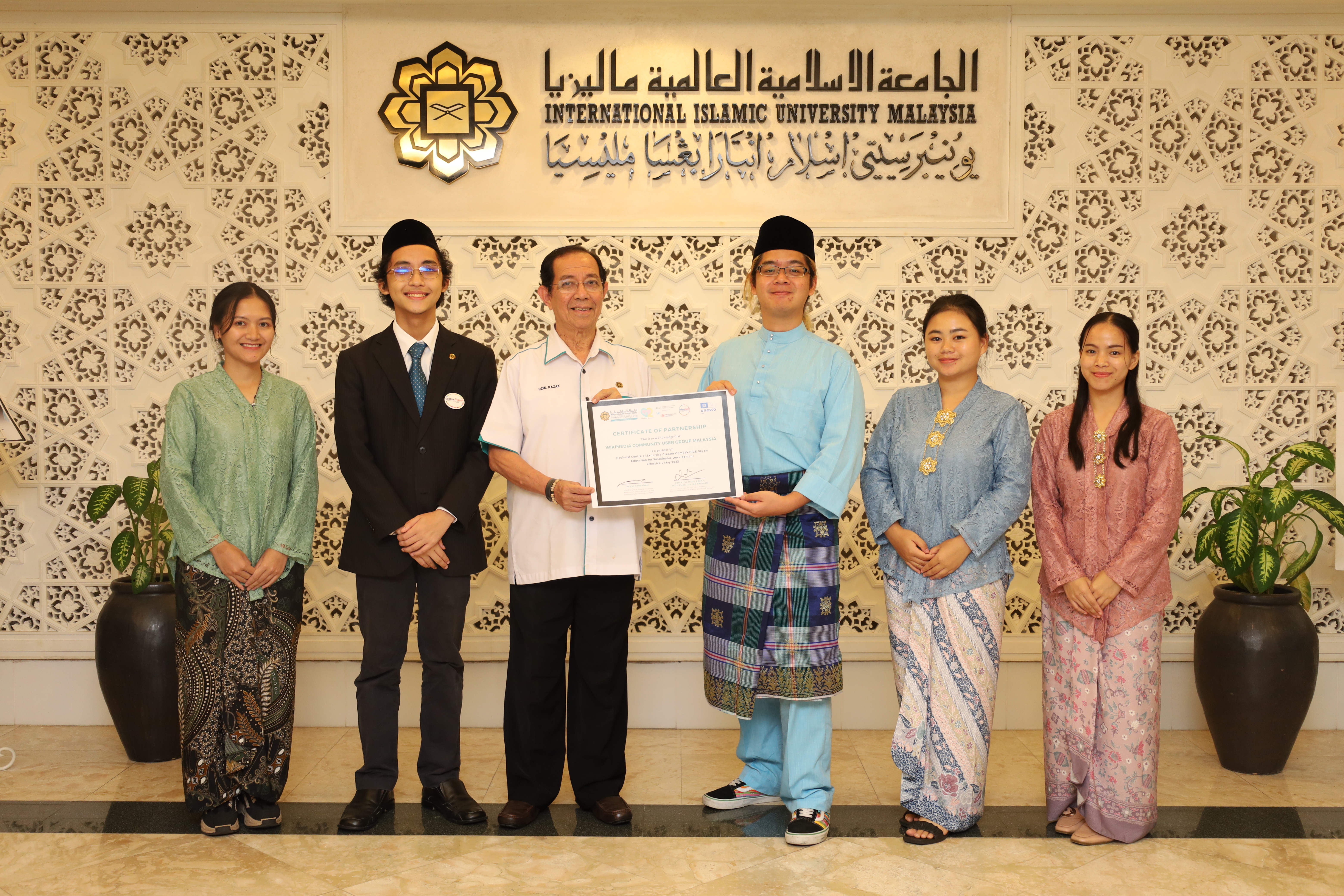 The WikiKata initiative, spearheaded by the Wikimedia Community User Group Malaysia (WCUGM) in collaboration with the International Islamic University Malaysia (IIUM) and other national agencies, has garnered international recognition for its efforts to preserve endangered indigenous languages. Through an immersive, community-based framework, the project deploys student volunteers to rural settlements to train indigenous groups, such as the Mendriq and Kensiu tribes, in documenting their native languages on digital platforms like Wiktionary and Wikipedia. This collaborative approach to sustainable capacity-building earned WikiKata the International Green Gown Award 2024 for Student Engagement and formal acknowledgment at the UNU-IAS RCE Awards 2024. Bolstered by institutional funding and comprehensive media coverage, the initiative is actively expanding its digital preservation footprint through nationwide school competitions and upcoming outreach programs targeting the Jakun community.
Writer: EmpAhmadK Wikimedia contributor PeaceSeekers outlined strategic guidelines for maximizing remote participation in global events such as Wikimania 2024. The comprehensive framework advises virtual attendees to formally register via Meta-Wiki to ensure access to interactive platforms and inclusion in official attendance metrics, while carefully curating their viewing schedules based on time zones and relevance. During the conference, participants are encouraged to utilize detailed note-taking and actively network through dedicated online channels, such as official Telegram groups, to foster global community engagement. To ensure long-term impact post-conference, the author recommends reviewing archived sessions on the Wikimedia Foundation's YouTube channel, initiating strategic follow-up discussions with local Wikimedia chapters, and amplifying key takeaways across professional and social media platforms to further drive the movement's open-knowledge initiatives.
The Malay Wikisource, the inaugural Wikimedia project launched under the Wikimedia Community User Group Malaysia (WCUGM), has officially surpassed 10,000 edits just two months after its debut on April 30, 2024. Spearheaded by dedicated contributors such as PeaceSeekers, the platform focuses on digitizing classical Malay epics, colonial-era linguistic dictionaries, and modern public domain governmental documents. As the platform scales, the community has prioritized establishing standardized formatting guidelines, resolving technical hurdles related to rendering traditional Jawi and Rejang scripts, and leveraging social media to recruit and train new editors. Recognizing the steep learning curve for beginners, the initiative envisions itself as a comprehensive, free digital library that integrates seamlessly with existing wiki projects, ultimately aiming to dismantle digital paywalls and provide global researchers and the public with unrestricted access to Malaysia's rich literary and historical heritage.
Writer: PeaceSeekers  The ESEAP Conference 2024 will be the third regional conference for Wikimedia communities throughout the ESEAP region. ESEAP stands for East, Southeast Asia, and the Pacific. The conference will take place in Kota Kinabalu, Malaysia from the 10th to 12th of May, 2024. The conference aims to bring together the ESEAP movement for three days of meet ups, training, workshops, and discussions to further strengthen the collaborations between its community. ESEAP 2024 will aim to build on the momentum driven through the ESEAP Conference 2022 and Wikimania Singapore where the ESEAP Strategy Summit was also hosted. Through this blog we will unveil the logo and concept for this year’s conference, and the central theme to share the conference COT’s objective, vision and ambition behind the same. Conference Theme In order to celebrate the growth and commitment of the movement in the region and draw a connection between the theme of 2022 and the 2024 conference, the Core Organizing Committee (COT) has adopted Collaboration Beyond the Horizon as the central theme of the conference. The theme aims to celebrate the limitless possibilities that lie beyond our current boundaries of collaboration. In a world where innovation knows no bounds, this theme encourages attendees to look beyond familiar horizons and embrace new frontiers of cooperation. Whether it is forging partnerships across the movement, creative approaches to connect contributors across the region, or addressing present movement challenges through collective action, this conference serves as a platform to embark on a journey to expand the horizons of collaboration and unlock the full potential of collective action, movement impact and sustained growth.  Unveiling the logo of the ESEAP Conference 2024
The conference Logo is based on the Warriors Monument in Kota Kinabalu and is designed by Ahmad Ali Karim, who’s also the External Relations Ambassador and graphic designer for Wikimedia Community User Group Malaysia. The monument was chosen for its unique design, yet mysterious and unsung background, with many people even in Malaysia not knowing of its existence. In fact, as ironic as it is, at the time this post was made, the monument does not even have its own Wikipedia article in English and Malay (as well as Kadazandusun Incubator). The logo takes great inspiration from the sky, linked to the central theme by presenting the horizon – the purple depicting sunset, dark blue being night, and the light blue resembling the day. The conference logo incorporates the dots seen in the actual monument, with 11 dots positioned in a strategic manner to represent the 11 nations that make up the formal communities under the ESEAP region; these dots also represent stars in the night sky. The merging of colors echoes the beautiful dynamics reminiscent of the gradual change of light during the day, symbolizing our united regional togetherness and collaborative attitude. This picture highlights even more how important it is to coordinate efforts and remain committed to advancing regional development. Over the course of the next few weeks the COT will share more information on our approach and thinking behind the conference. So stay tuned for more! To know more about the conference or to get in touch with the COT, please visit our meta-wiki page. Image:
 On November 24, 2023, a meeting transpired between the Wikimedia Community User Group Malaysia and the Ethnic Language Unit of the Ministry of Education Malaysia (KPM) in Putrajaya. The central focus of this meeting was a profound exploration of strategies aimed at fortifying ethnic languages in Malaysia, with a particular emphasis on contributing substantively to the International Decade of Indigenous Languages 2022-2032—a global initiative championed by the United Nations Educational, Scientific and Cultural Organization (UNESCO). During the meeting, our representatives introduced Wikimedia projects to the KPM, elucidating the various ongoing Wikimedia initiatives implemented in schools and educational institutions. These discussion, notably centered around ethnic languages, included activities such as Wikikata. A primary concern addressed was the accessibility of ethnic language words, with the aspiration that collaboration with the Ministry of Education and Culture could facilitate an increase in word entries on the Wikimedia project, mainly Wikikamus, along with the inclusion of pronunciation audio for these words. The ultimate goal is to establish Wikipedia content for the ethnic languages present in Malaysia, with an initial focus on those in Sabah.
Another salient point of discussion centered on the imminent threat of language extinction, given that 80% of the 133 languages in Malaysia are indigenous, many of which face limited usage. Currently, 95 of these languages are classified as endangered, signaling a pressing need for concerted efforts to preserve the languages of the indigenous communities in Malaysia. The conversation also aimed at integrating Wikimedia programs into the new curriculum and co-curriculum by 2027. Preliminary initiatives were already underway, including the establishment of the Program Jalinan dan Jaringan Asrama Desa: Wikipedia Melahir Penulis Dunia program led by the Sandakan District Education Office in Sabah. Appreciation is extended to Mrs. Sarina binti Salim, Deputy Director (Language and Literature Sector) of the Curriculum Development Division; Mrs. Sandra Logijin, Chief Assistant Director (Ethnic Language Unit); and Puan Mutiara binti Megat, Assistant Director (Ethnic Language Unit), for their openness in engaging with the representatives of Wikimedia Malaysia.
Reference:
|
arkib
August 2026
kategori
All
|


 RSS Feed


|
|